Help us save the next generation!
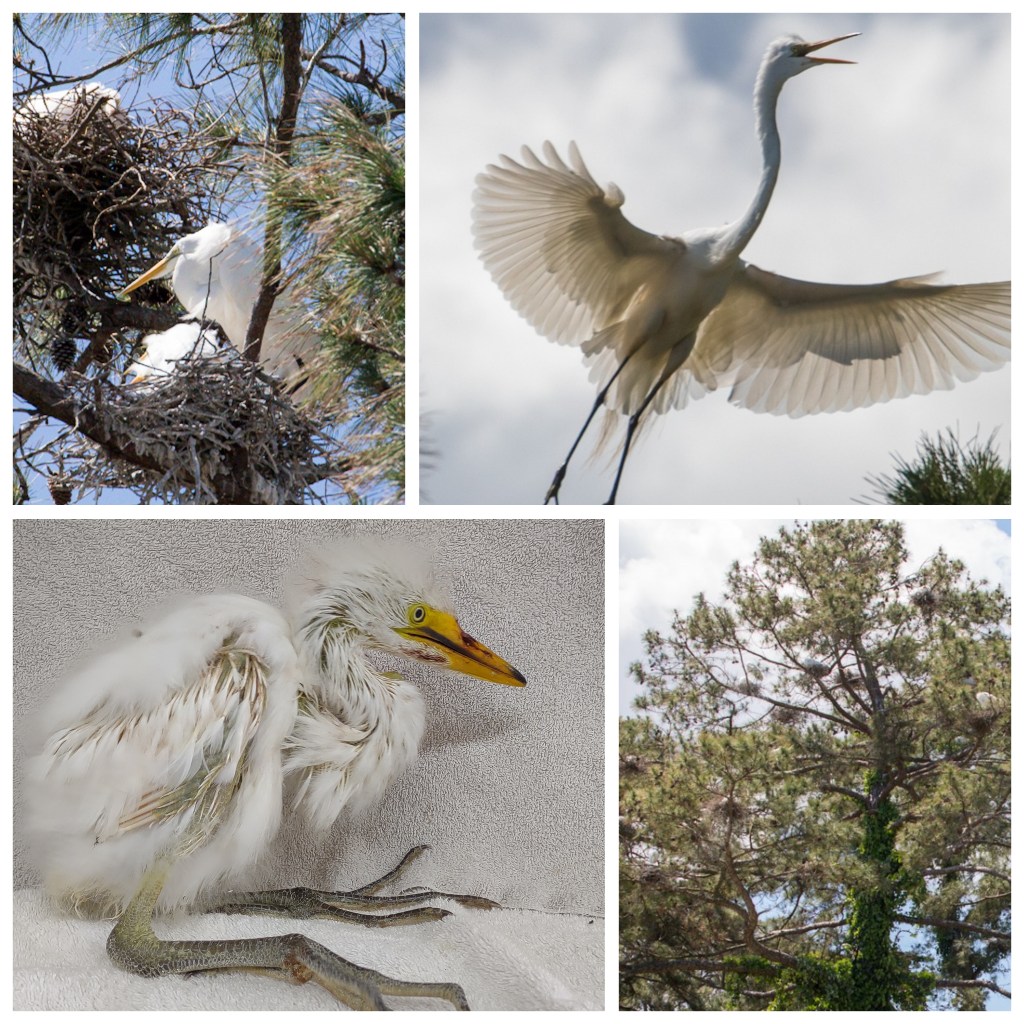
The Wading Bird Nest Monitoring Program conducts daily inspections of nesting sites for select wading and seabird species, including Yellow-crowned Night Herons, Common Terns, Green Herons, Great Blue Herons, and Great Egrets to identify, rescue, and transport fallen or injured young birds to local avian rehabilitators for care.
This program is typically active between Memorial Day and Labor Day.
The Challenge
Natural habitats supporting wading bird nesting sites have been declining in the greater Tidewater region. The remaining fragmented sites are often overcrowded, and unable to support the number of nesting birds. This overcrowding makes nesting sites vulnerable to high winds, storms, and predators, leading to catastrophic events. For instance, in June 2023, a storm caused 40 young Great Egrets to fall from their nests and resulted in an unfortunately high mortality rate.
Dozens of egrets are recovering after falling from trees in Portsmouth
by: Lauryn Moss
Posted: Jun 27, 2023 / 08:22 PM EDT
Updated: Jun 27, 2023 / 11:54 PM EDT
Other bird species (not necessarily wading birds), such as Common Terns, nest in precarious locations, making it difficult to return fallen birds to their nests. Regular monitoring of these sites is crucial to ensure fallen young birds receive care promptly, mitigating the challenges posed by overcrowded nesting sites, urbanization, and habitat loss. Daily monitoring is essential for species like Yellow-crowned Night Herons and Egrets, which do not provide care for fallen young. And early intervention is critical to minimize injuries and support population numbers.
The Solution
The Wading Bird Nest Monitoring Program inspects known rookeries and nesting sites daily, rescuing fallen birds and delivering them to TREE (or other avian rehabilitators if directed) for triage, treatment, and rehabilitation, with the ultimate goal of releasing them back into the wild. This program relies on volunteers from local environmental and wildlife rescue organizations working with
TREE to monitor known sites.
TREE, a leading wading and seabird rehabilitation organization, obtains access to private properties housing rookeries and will supply volunteers with rookery locations, training, and some equipment. TREE’s extensive experience, specialized enclosures, and partnerships with local veterinarians and food suppliers ensure compassionate care for injured wading and seabirds in the region.
Volunteers are needed to travel and rescue these birds across the Tidewater region (Virginia beach, Norfolk, Portsmouth, Chesapeake, Hampton Roads, etc.)
Program Information
Coordination
Volunteers must have a smartphone capable of sending/receiving images, texts and download WhatsApp for communication and coordination with TREE, other rescuers, and site monitors. After completing the required training, volunteers will be added to the TREE Wading Bird Monitor and Rescue Group on WhatsApp.
Training
Volunteers must attend training with one of TREEs rehabilitators prior to monitoring any nesting sites. This training takes about one hour and can be counted as Continuing Education (CE) for most state programs. This training addresses observation procedures, risk mitigation, legalities of interacting with wild birds, safe handling, rescue techniques, and transportation of injured birds.
Responsibilities
Volunteers are expected to monitor a single or multiple sites at least once a day during the nesting and fledging seasons (May-July) and during/after high-risk events like storms or high winds. Monitoring involves traveling to the site, observing nests from a distance with binoculars to avoid disturbance, and documenting findings via WhatsApp.



 Tidewater Rehabilitation and Environmental Education